


Project
Aircraft Design Project
A conceptual aircraft design report covering requirements, sizing, configuration, aerodynamics, stability, and performance.
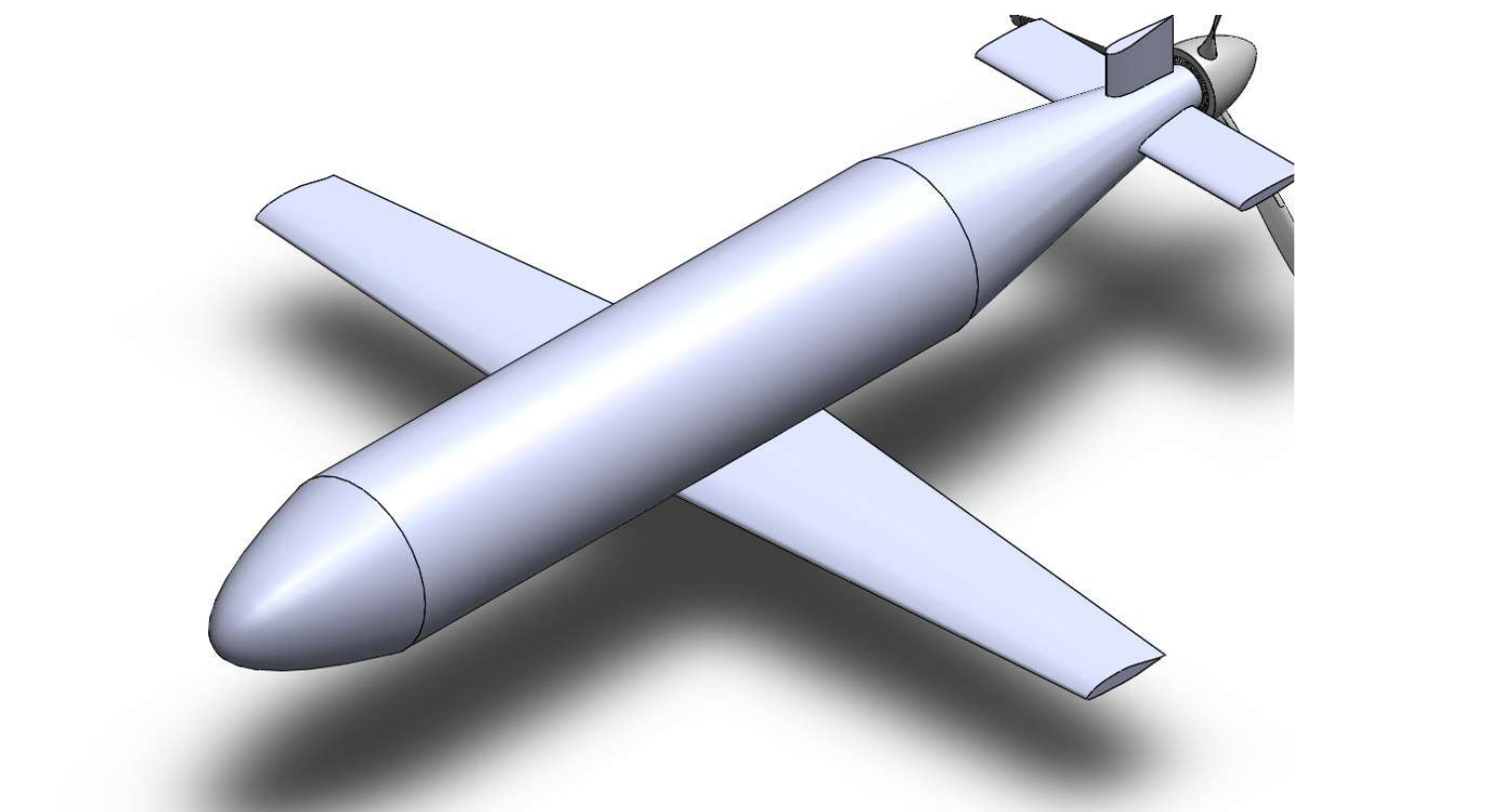
Overview
This University of Waterloo aircraft design project developed a conceptual uncrewed Search and Rescue (SAR) aircraft from mission requirements through sizing, configuration, aerodynamic analysis, stability checks, and performance estimates.
The design was motivated by the large physical area involved in Canadian Search and Rescue operations. The aircraft concept was a remotely piloted or semi-autonomous drone capable of sweeping a search area with onboard sensors, locating missing people, and carrying emergency survival equipment internally.
Mission and Requirements
The aircraft was designed around low altitude search operations rather than high altitude endurance. A cruise altitude of 3000 ft was selected to improve sensor resolution and make it more realistic for people on the ground to signal the aircraft. The report used a 1000 nautical mile range target and estimated that, with a roughly 50 degree sensor horizontal field of view, the aircraft could survey approximately 1576 sq. km in a single mission profile.
The payload definition included a practical Search and Rescue sensor suite and deployable support equipment: a Canon EOS 5D DSLR camera, FLIR Boson 640 infrared camera, MicaSense RedEdge-MX multispectral camera, LiDAR, synthetic aperture radar, and two Uni-pac II survival kits. Initial sizing assumptions were based on proven single engine aircraft characteristics, particularly the Piper PA-28-180, to keep the concept grounded in existing technology.
Key requirements included compact aircraft dimensions, internal payload volume, a 123 kt normal cruise speed, 50 kt stall speed, 1000 nautical mile range, 3000 ft cruise altitude, short takeoff and landing distances, and sufficient climb performance for the mission.
Sizing and Configuration
The first stage of the design estimated takeoff weight, wing loading, and thrust-to-weight ratio from the mission profile. The fuel fraction was calculated from the flight phases and range equation, then combined with the payload and empty weight assumptions to estimate the initial aircraft weight. The report then iterated the design calculations to converge on the final configuration.
The final appendix values placed the revised takeoff weight at approximately 1110 lb, with a wing area of 44.81 sq. ft, aspect ratio of 7.27, span of 18.05 ft, root chord of 3.31 ft, tip chord of 1.65 ft, and mean aerodynamic chord of 2.57 ft. The fuselage was sized to a 20 ft length and arranged around the engine, avionics bay, payload, fuel, and structural components.
The design used a low wing configuration because it integrated well with retractable tricycle landing gear, allowed the gear to retract into the wing structure, and provided useful ground clearance for the engine and propeller. The report also identified the need for dihedral and wing body fillets to support lateral stability and reduce aerodynamic interference at the wing root.
Aerodynamics and Stability
The wing design referenced the NACA 65(2)-415 airfoil. High lift performance was improved with double slotted flaps, with takeoff and landing flap deflections selected below the maximum referenced 55 degree case to balance lift gain, manufacturability, and flow quality. The final lift coefficient estimates used a takeoff increment of 0.65 and a landing increment of 1.53, producing maximum lift coefficients of approximately 2.05 for takeoff and 2.93 for landing.
The aircraft used a conventional tail for a good balance of structural weight, stability, and control authority. The tail sizing followed empirical horizontal and vertical tail volume methods, using recommended single engine general aviation values to determine the horizontal tail area, vertical tail area, and tail placement.
Center-of-Gravity (CoG) placement was iterated alongside wing placement. The final aircraft center of gravity was estimated at about 10.26 ft from the nose, with the wing placed relative to the aerodynamic center to support longitudinal stability. The report verified stability by checking the slope of pitching moment coefficient with respect to angle of attack; the final value was negative, indicating a restoring moment after a disturbance.
Performance
The final performance estimates improved after the design iterations reduced the aircraft weight. The minimum power required decreased across the main flight conditions: takeoff distance requirement power dropped from 86.67 hp to 76.35 hp, maximum rate of climb power dropped from 66.96 hp to 58.99 hp, and maximum velocity power dropped from 38.61 hp to 34.01 hp.
The final calculated takeoff distance was approximately 580 ft and the landing distance was approximately 1655 ft, satisfying the short landing strip operating goals used in the design study. These numbers reinforced the aircraft’s intended use from small regional airports, emergency strips, or improvised operating areas.
Outcome
This project strengthened my ability to connect conceptual mission requirements to a full aircraft level design. It brought together sizing, payload definition, configuration tradeoffs, aerodynamic coefficients, Center-of-Gravity placement, tail sizing, landing gear layout, and performance consequences into one integrated design workflow.